
End-to-end UX design for an AI-powered HR SaaS platform, as sole designer from research and strategy through to a production-ready design system and shipped interfaces.
AskFritz is a B2B SaaS platform that helps companies onboard, manage, and query employee knowledge using AI. I joined as the sole designer, with no existing design language, no component library, no prior UX work to build on.
The platform serves two distinct user types: HR admins who manage the company side, and employees who interact with their personal dashboards and work queues. Designing for both paths simultaneously required a clear systems-thinking approach from day one.
I owned everything: research, information architecture, interaction design, visual design, and the Figma design system, working directly with the founding engineering team in an agile environment.


AskFritz was an AI-powered HR compliance platform serving two very different user types: HR managers who needed to configure and monitor compliance workflows, and employees who needed to complete tasks quickly and without confusion. The existing navigation had been built by engineers without a designer involved. It had 8 steps to complete a core task, inconsistent terminology across screens, and no visual hierarchy to help users understand where they were in a process. The result: users were abandoning tasks halfway through and HR managers were spending hours on support tickets that should not have existed.

Before opening Figma I ran 15 user research sessions across both user types. Three findings shaped every subsequent design decision.
Users did not understand the information architecture. The navigation grouped features by technical function, not by user task. HR managers looking to run a compliance report had to navigate through four unrelated sections to find it. The mental model of the product did not match the mental model of the users.
Employees trusted the product less because it looked unfinished. Inconsistent spacing, mixed font weights, and unlabelled icon buttons made employees feel the platform was unreliable. Trust in an HR compliance tool is not separable from its visual quality.
Both user types needed the same action but in completely different contexts. The most common task for both user types involved the same underlying action but at completely different points in their workflow. The existing design forced them through the same path, which worked for neither.
The core navigation was rebuilt around user tasks rather than product features. Role-based views were introduced so HR managers and employees saw different primary navigation from login. The most common task for each user type was surfaced to one click from the dashboard.
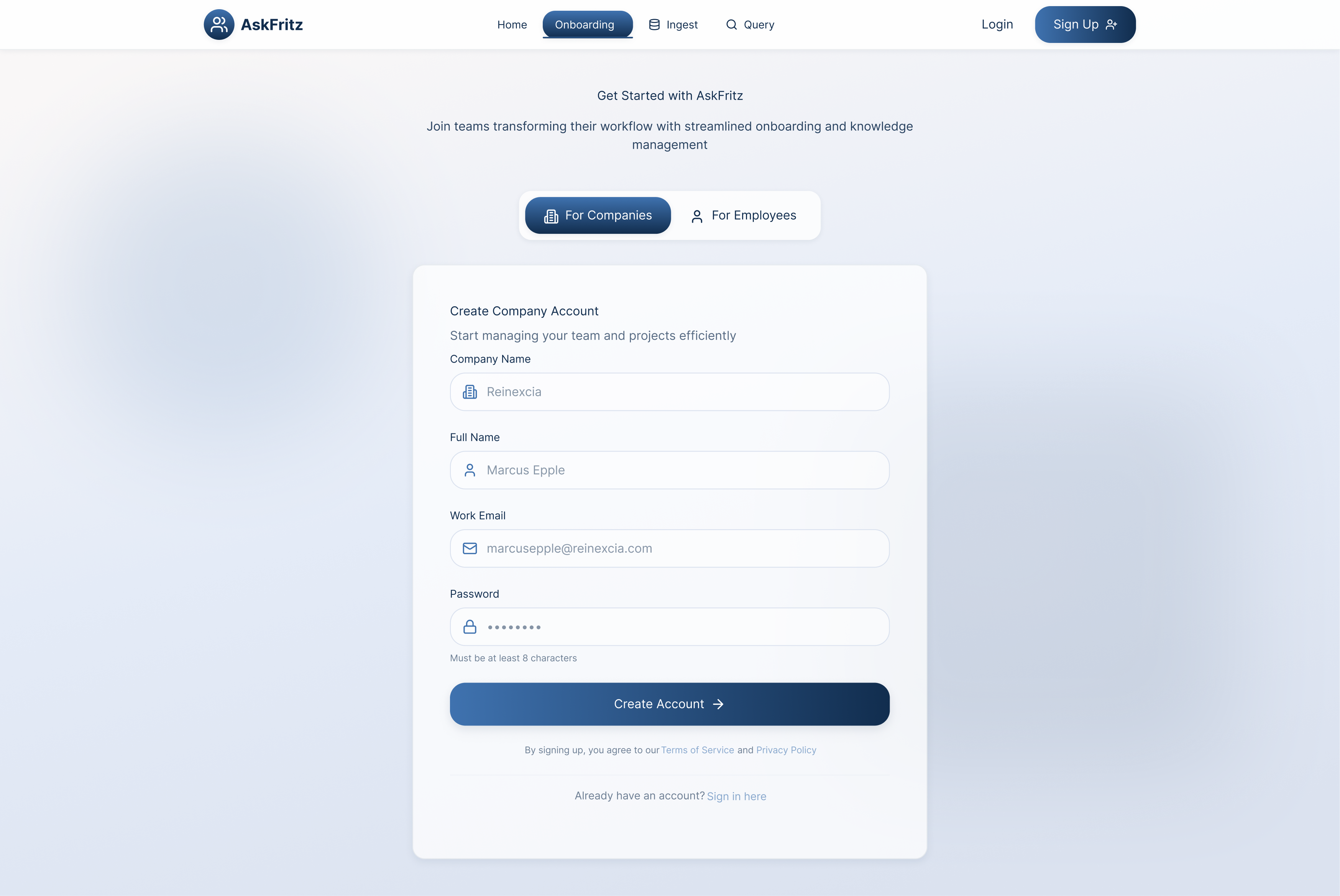

AskFritz had no design system when I joined. Components were recreated by hand in each new screen. I built a Figma design system from scratch: colour tokens, typography scale, spacing system, and a component library of 40+ reusable components with documented usage guidelines and accessibility annotations. The system reduced iteration cycles by 25% and gave engineers a single source of truth to build from.

During the navigation redesign I proposed removing a section that appeared in the existing product but had near-zero usage in analytics. The product manager was concerned about removing visible functionality even if unused. I presented the usage data alongside three user research quotes from people who had never found the section despite needing what it contained. The section was removed and its functionality folded into a more discoverable location. No support tickets were raised about the missing section after launch.
Post-launch usability testing showed a 35% improvement in task success rate and a reduction in average task completion from 8 steps to 5. Iteration cycles between design and engineering reduced by 25% after the design system was adopted. Most importantly, the volume of HR support tickets related to navigation confusion dropped in the first month after launch.