

Aevi
A private AI alter ego that remembers, reflects, and evolves with the user.
Overview
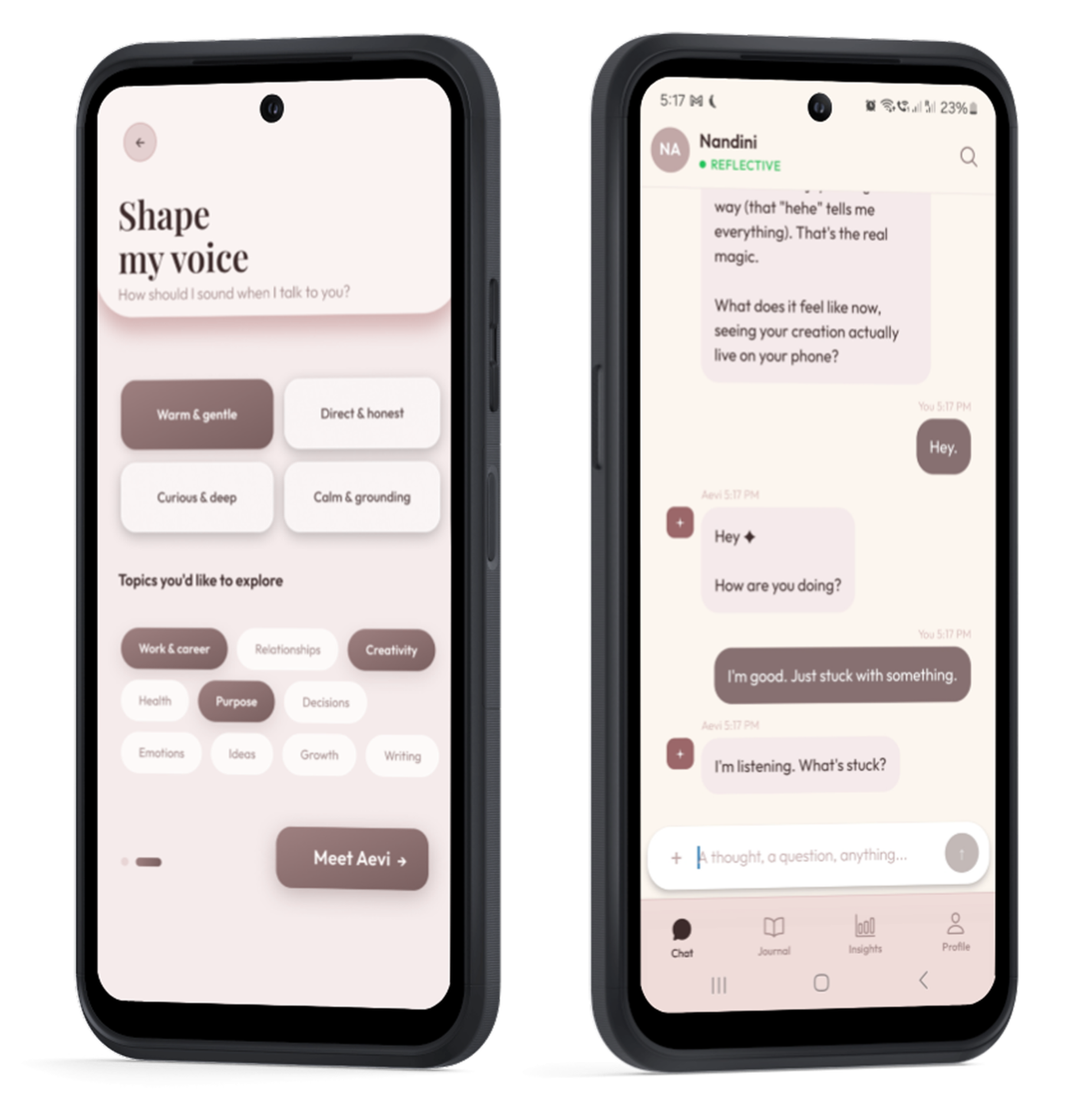
Aevi is a private AI alter ego app that remembers, reflects, and evolves with the user over time. It combines journaling, AI conversation, mood insights, and content creation into one intimate, private space.
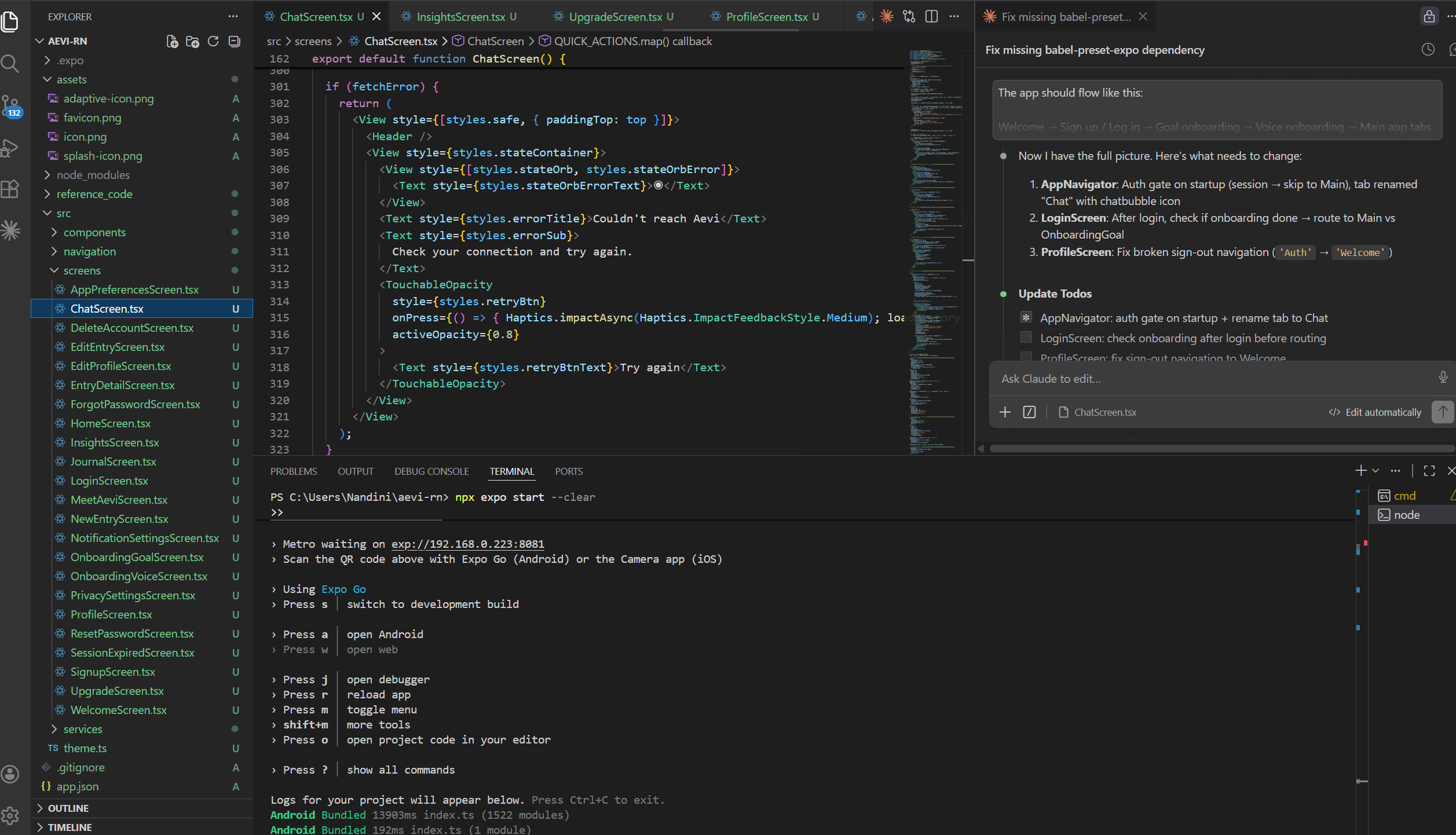
What makes this project unusual is that I didn't stop at the design. As a UX designer, I wanted to understand the full product lifecycle — so I designed and built Aevi entirely solo, using React Native, Expo, Supabase, and Claude as a development partner.
From the first sketch on paper to a live app in Google Play closed beta testing — this is that story.
Role
Solo product designer and developer
Timeline
March 2026— Present
Tools
Figma, React Native, Expo, Supabase, Stripe, Claude AI, VS Code
Status
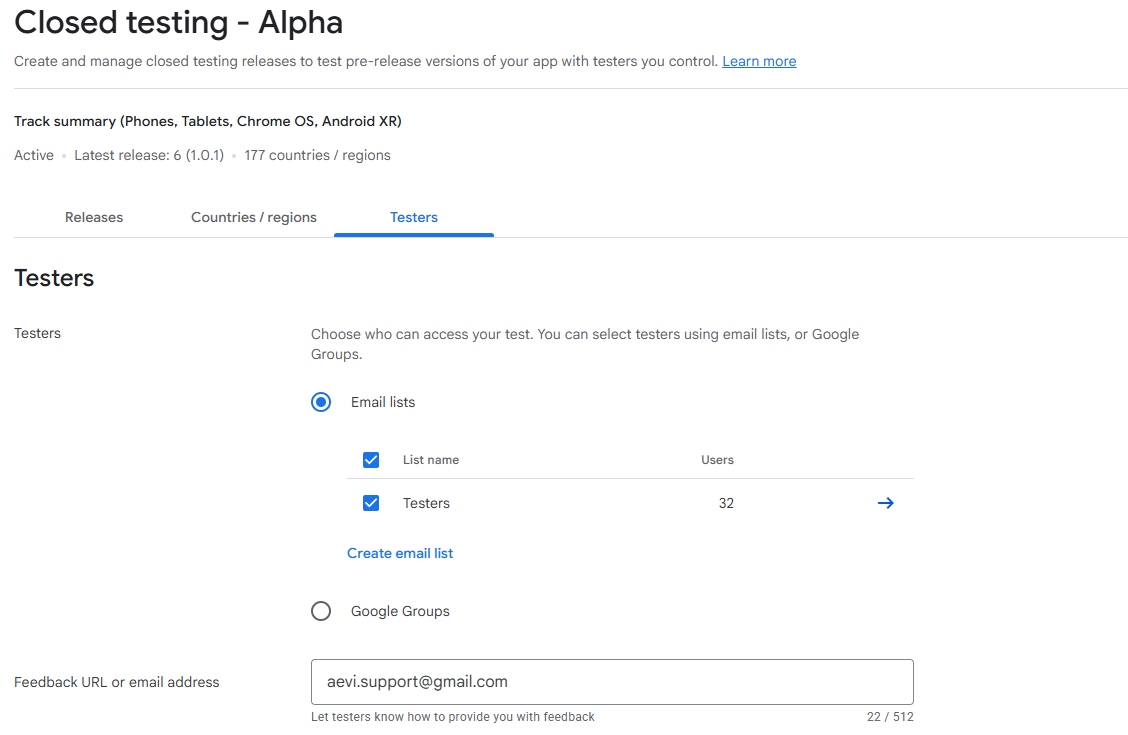
Live on Google Play — closed beta testing with 35 testers
LINK: Join the waitlist → https://aevi-waitlist.vercel.app/
LINK: Beta access → https://play.google.com/store/apps/details?id=com.aevi.app
Why this project
As a UX designer I've spent years solving for users. But I'd never owned the full journey from concept to shipped product. I wanted to change that.
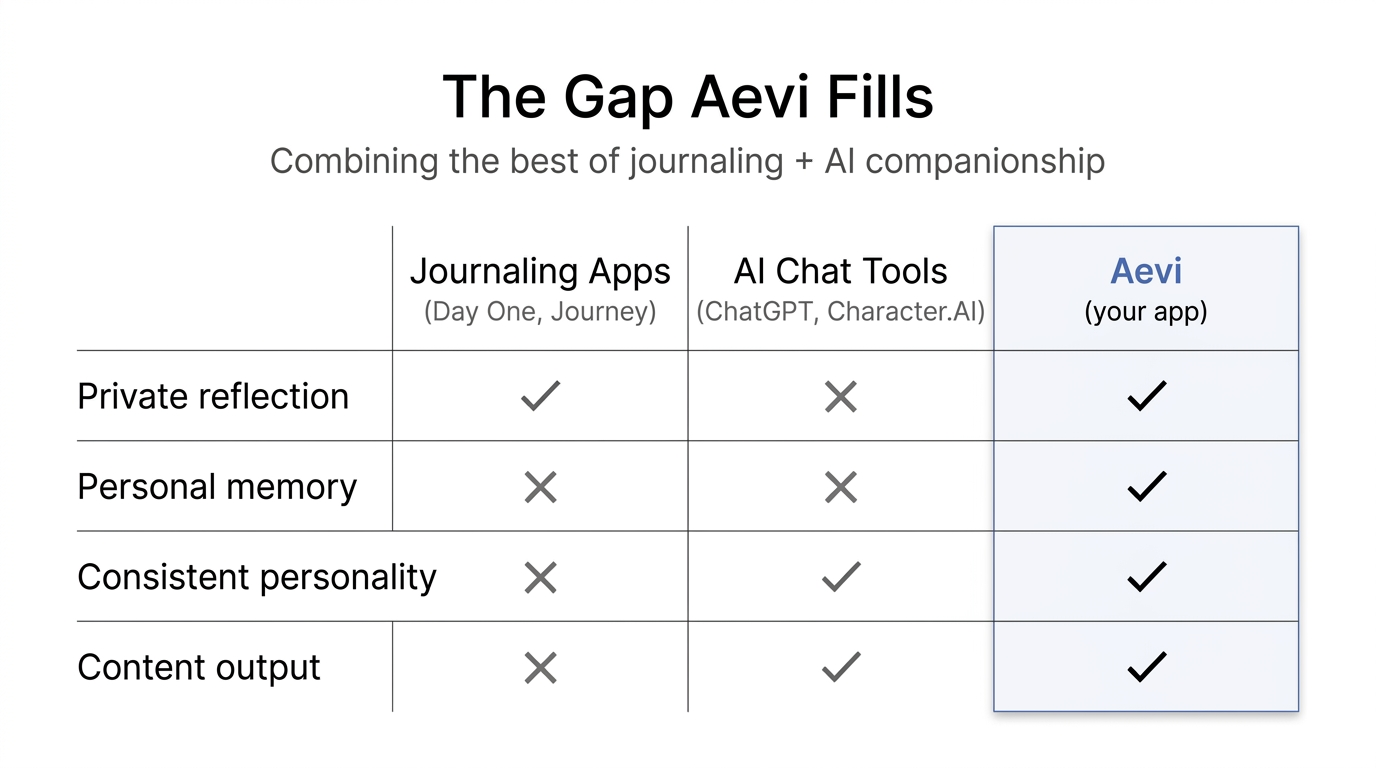
I also noticed a real gap in the market. Three types of products exist but none does everything:
Journaling apps help you write but don't think with you. AI chat tools feel useful but forget you the moment you close the app. Social platforms offer expression but sacrifice privacy.
I wanted to design something that combined all three strengths — and then actually build it to see if the vision held up under real technical constraints.
My process
I started where I always start.. on paper.
Before opening Figma, I sketched out the core flows by hand. The chat screen, the long press action menu, the content creation screen. Drawing it first helped me think through the interaction logic without getting distracted by visual polish.
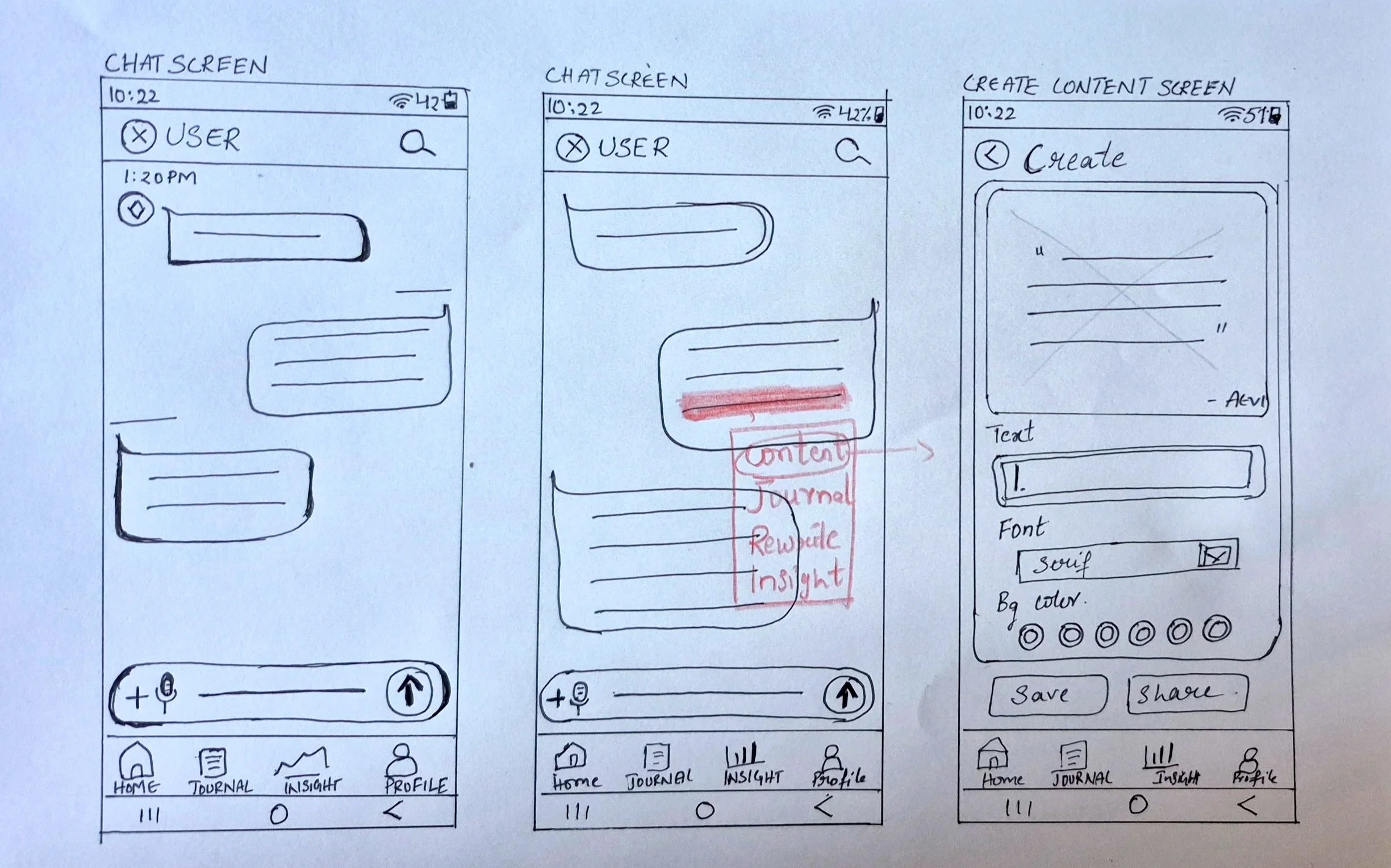
The key interaction I was designing around was the long press on a chat bubble — giving users the ability to turn any message into a journal entry, content draft, or insight. This became one of Aevi's most distinctive features.
From sketches I moved into Figma for high fidelity screens, then directly into VS Code to build.
Product research
I started by mapping the competitive landscape:
Journaling apps (Day One, Journey): Strong for writing, weak for analysis.
AI journaling (Reflection, Mindsera): Good for guided reflection, less personal.
AI companions (Replika, Character.AI): Emotionally engaging, not private or productive.
The opportunity was a private AI that:
remembers long-term context,
responds in a consistent personality,
helps users reflect and create.
Product direction
That research led to a clear product definition:
Aevi: A personal AI alter ego that remembers, reflects, and evolves — turning your thoughts into clarity, content, and insight.
I focused on three core needs:
Private reflection (journaling + memory),
Personal personality (custom AI voice),
Practical output (content generation).
User flow
I designed a simple flow that prioritises quick value. The onboarding captures the user's goal and sets the AI tone in two steps. Chat is the home screen. The primary daily interaction. Journal, Insights, and Profile sit alongside it. Content creation is not a separate tab but an action launched from within Chat or Journal.
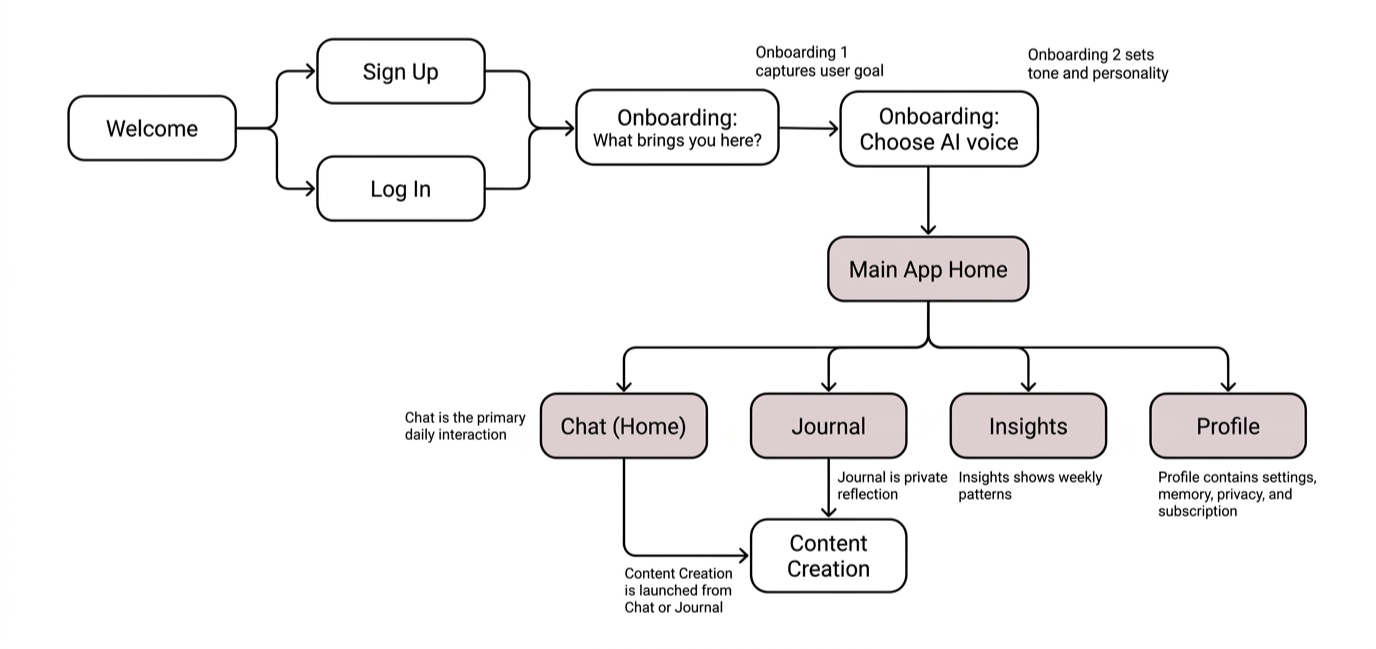
Key decisions:
Chat as home screen for immediate emotional connection
4-tab navigation to keep cognitive load low
Content creation as a contextual action, not a destination
Onboarding in two steps - what brings you here, then choose your AI voice
Building with AI
I used Claude as a development partner throughout the build. This was a deliberate choice.. I wanted to understand how far a designer could push a real product without a dedicated engineering team.
What worked well was rapid prototyping of UI components, state management, navigation flows, and debugging. What required the most human judgment was product decisions — how memory should feel, when the AI should push back versus reflect, how to make tone feel personal rather than generic.
The build taught me something important: AI accelerates execution but it does not replace product thinking. Every meaningful decision still required deep understanding of the user.
The app — core screens
Aevi is built around four core experiences that cover the full inner journey — from raw thought to real output.
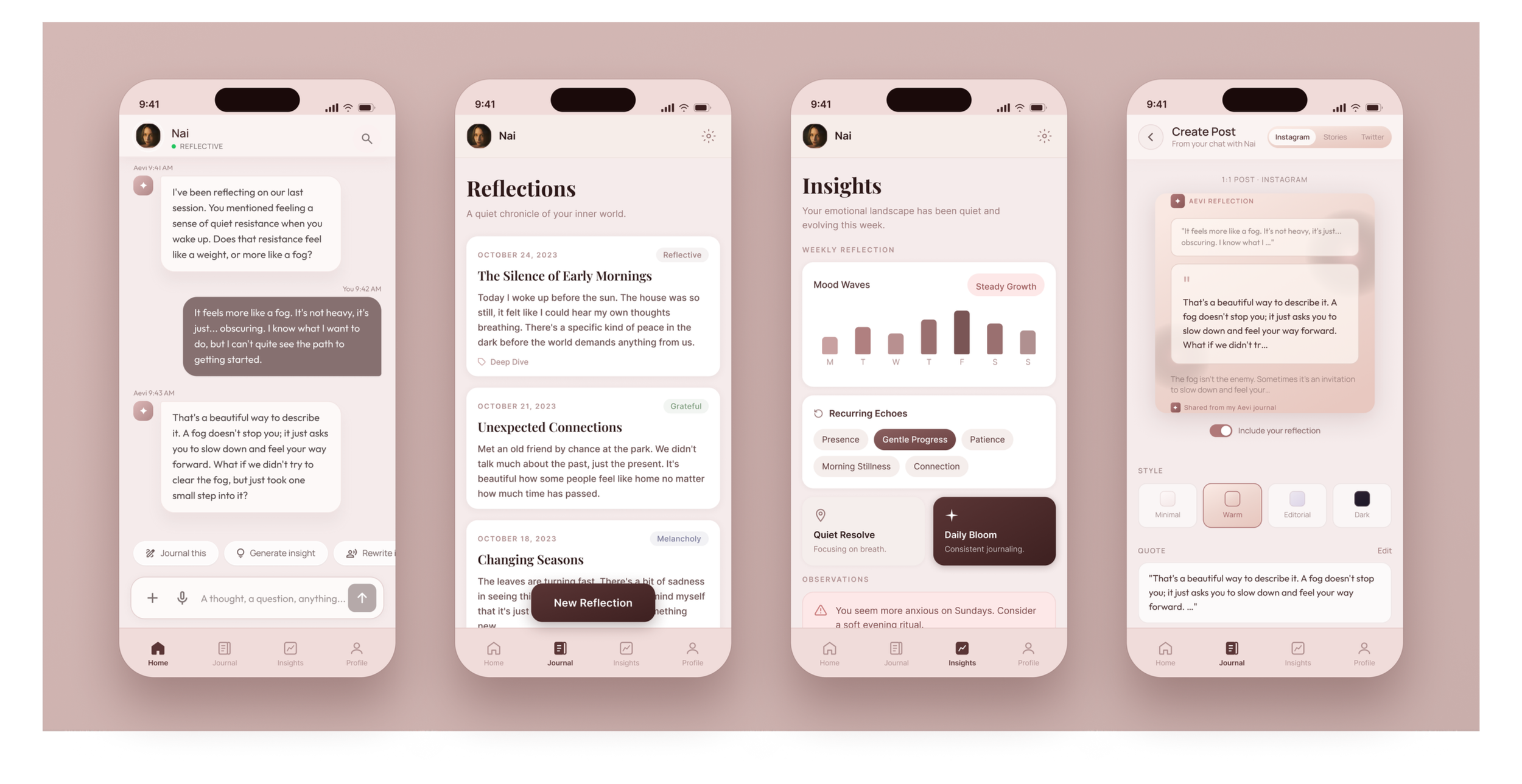
Chat is where everything begins. Aevi responds in real time, remembers past conversations, and surfaces patterns in your thinking. Every message can be journaled, rewritten, or turned into an insight with one tap.
Reflections is your private journal. Entries are tagged by mood, dated, and stored securely. It's a quiet space to write without judgment and Aevi reads between the lines.
Insights shows you what you can't always see yourself. Mood waves, recurring themes, weekly patterns Aevi notices what you repeat, what shifts, and what might need attention.
Create turns your reflections into content. Pick a style, format, and platform Aevi drafts it in your voice, not a generic AI tone.
What real users said
I launched closed beta testing in May 2026 with 29 testers. Within the first week I received direct feedback that shaped the next iteration. Feedback received:
"I need to be able to search my previous chats" - Added a search icon to the chat header so users can find past conversations instantly.
"I can't see my password when I'm typing it" - Added a show/hide password toggle to the sign in screen.
"I want to select just part of the message to turn into content, not the whole thing" - Currently being solved with native text selection on chat bubbles, replacing the whole-bubble long press with a precise selection flow. These three pieces of feedback came from real usage within days of launch. Each one is being addressed in the next build update.
Outcomes so far
Designed and shipped a full React Native app solo as a UX designer 32 closed beta testers on Google Play within the first week App size: 19.1MB — lean and fast Auth, payments (Stripe), AI chat, journaling, insights — all working in production Real user feedback collected and being actioned Waitlist live at myaevi.app
Key learning
Design informs code, code informs design. Building from scratch forced me to make design decisions I would never have faced in a handoff. Technical constraints made the product more realistic and more considered.
AI accelerates but doesn't replace product thinking. Claude wrote a lot of the code. But every decision about memory, trust, tone, and privacy was mine. The thinking is still the hardest part.
Shipping teaches you things prototyping never will. Real users found issues within 48 hours that I never caught in months of design. The feedback loop of a live product is irreplaceable.
Trust is the product. For an app built around private thoughts and feelings, every design decision from privacy controls to the tone of the AI is ultimately about whether the user feels safe.
What’s next ?
Fix text selection UX for content creation
Add Google Sign In
Complete 14-day closed testing period
Apply for Google Play production access
Public launch